Screen by Screen
What each screen shows
The device rotates automatically through whichever of these you've enabled. Tap the screen at any time to pause the rotation, or to jump forward.
🕐 Clock Always on
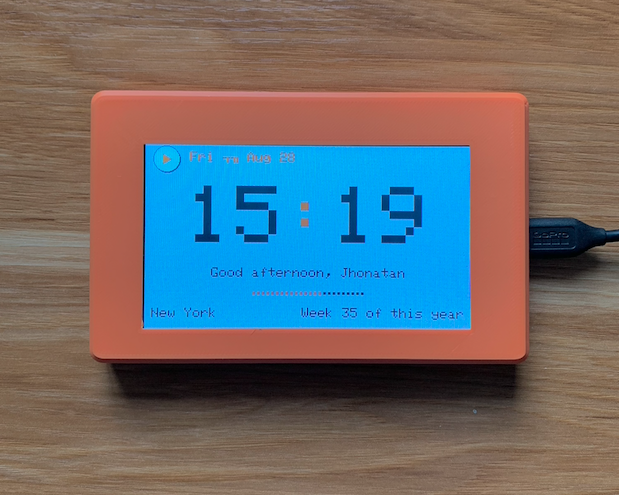
Large time display with the date, a day-progress dot strip, the current week number, and a friendly greeting that changes through the day. If you've searched for a city under Weather, its name appears here too.
📷 Add screenshot
assets/screens/clock.png
📷 Add screenshot
assets/screens/clock.png
🌤 Weather Channels tab
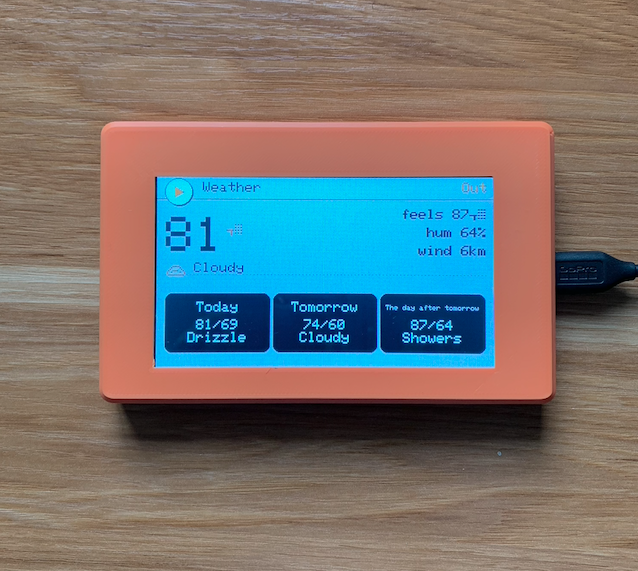
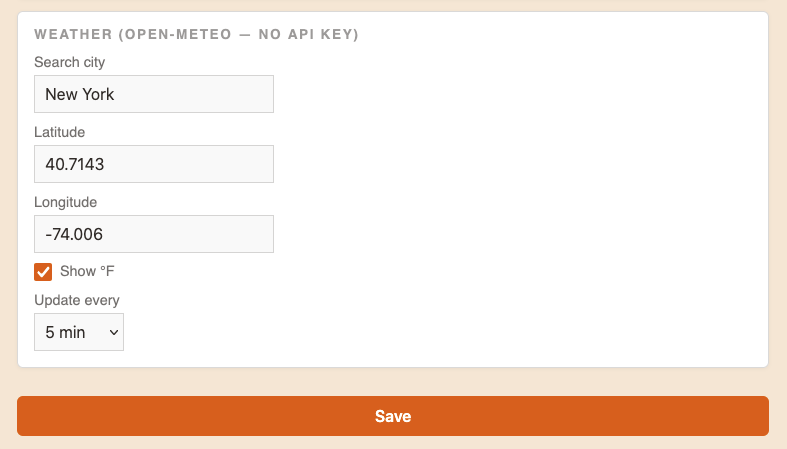
Search for any city in the world (powered by Open-Meteo — no account or API key needed) and pick it from the results. Shows current temperature, "feels like," humidity, wind, and conditions, in °C or °F.
📷 Add screenshot
assets/screens/weather.png
📷 Add screenshot
assets/screens/weather.png
📅 3-Day Forecast
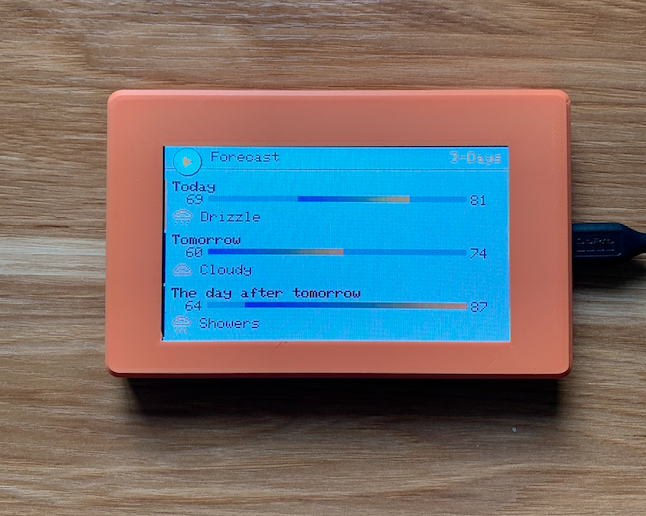
Today plus the next two days, for the same city as the Weather screen. Each day shows a low-to-high range bar (colder on one end, warmer on the other) so you can see at a glance which of the three days is relatively hot or cold.
📷 Add screenshot
assets/screens/forecast.png
ℹ️ Device Info
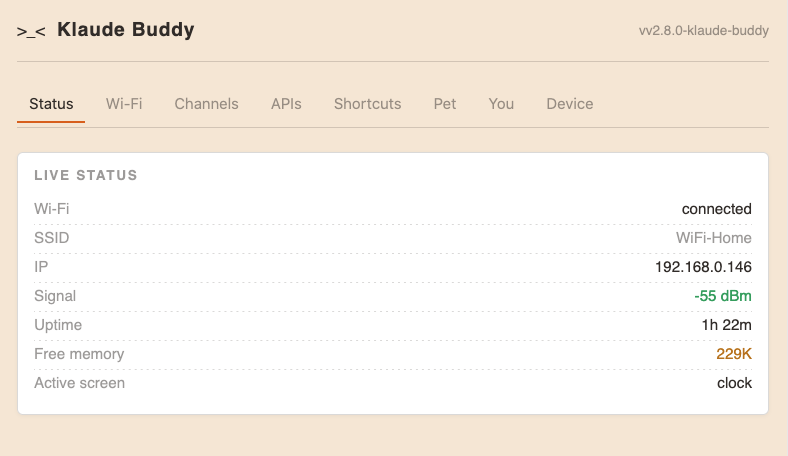
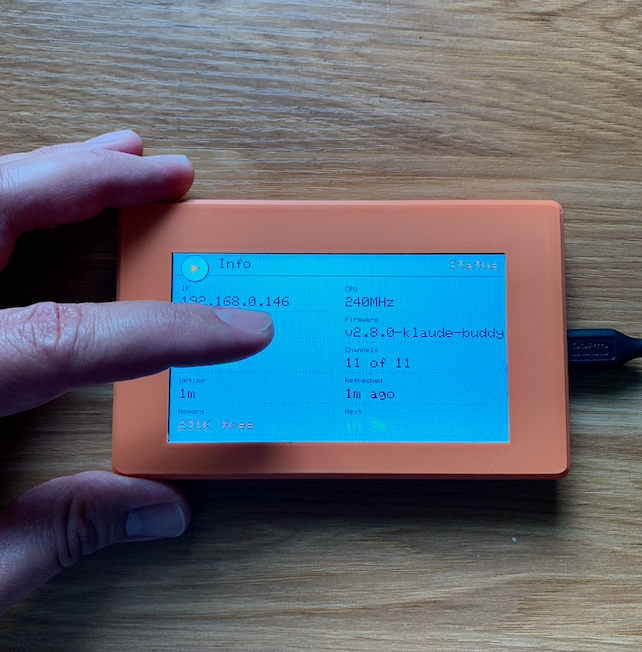
Diagnostics at a glance: IP address, Wi-Fi network and signal strength, uptime, free memory, CPU speed, firmware version, how many screens are active, and when data was last refreshed.
📷 Add screenshot
assets/screens/info.png
🔌 Custom APIs APIs tab
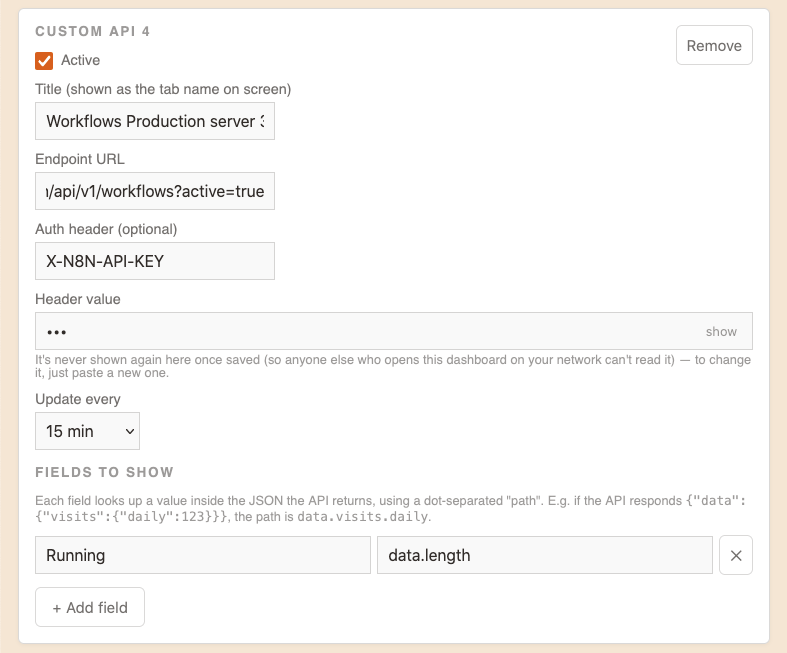
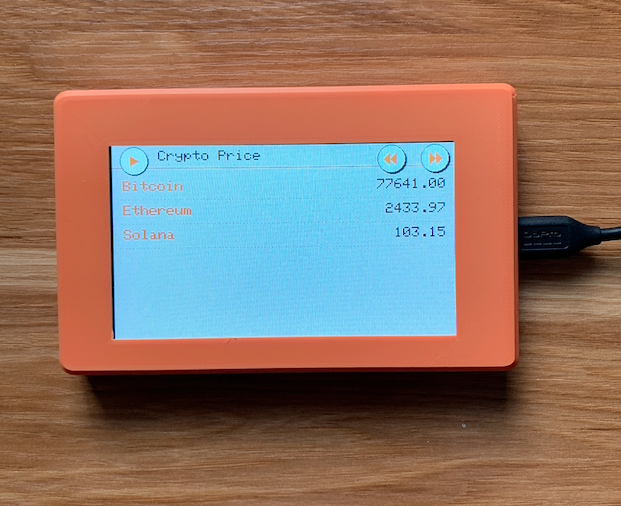
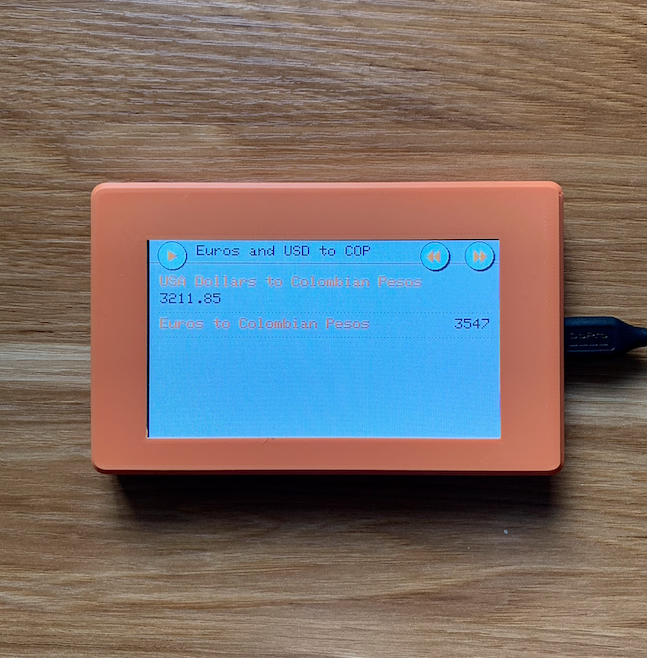
Connect up to 8 of your own APIs — anything that returns JSON. For each one you set a title, the endpoint URL, an optional auth header, and how often it refreshes (from every 5 minutes up to once a day). Then pick which values to show by pointing at a field inside the response, e.g. data.visits.daily.
Each API supports up to 24 fields, shown 4 per page (so up to 6 pages), automatically paging through with its own turn on screen — no scrolling or tapping needed.
📷 Add screenshot
assets/screens/custom-apis.png
📷 Add screenshot
assets/screens/custom-apis.png
📷 Add screenshot
assets/screens/custom-apis.png
🔗 Shortcuts Needs companion app
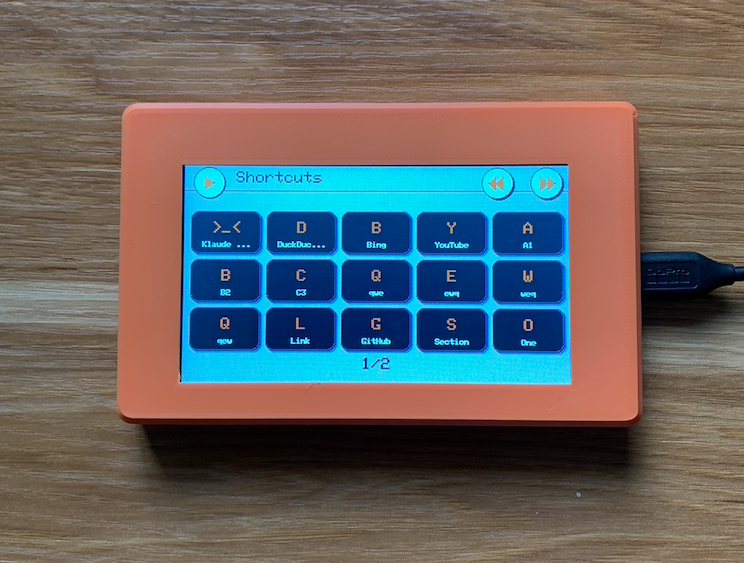
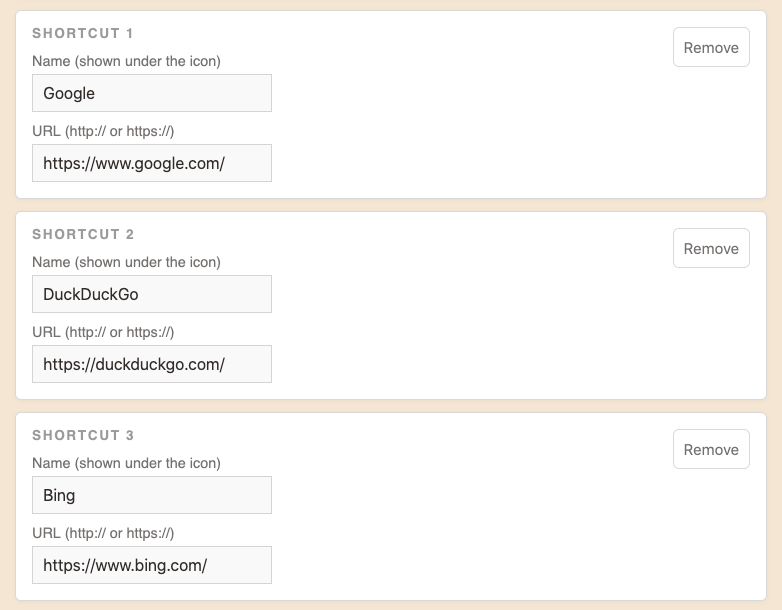
Up to 45 one-tap shortcuts to your favorite links, shown 15 per page (so up to 3 pages) — swipe to move between pages. This needs a small companion app running on a computer connected to the device by USB — tapping a shortcut tells that computer to open the link in its browser.
A brand-new device comes with one shortcut already loaded — the >_< icon, which opens the device's own dashboard in your browser. Edit or delete it like any other shortcut; it's just a convenient default, not something special.
📷 Add screenshot
assets/screens/shortcuts.png
📷 Add screenshot
assets/screens/shortcuts.png
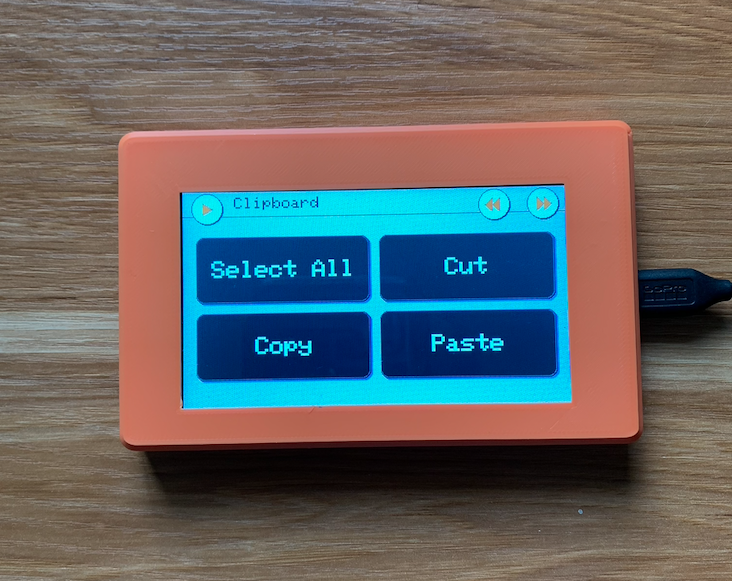
📋 Clipboard Needs companion app
Four buttons — Select All, Cut, Copy, Paste — that simulate the matching keyboard shortcut on the connected computer. Same companion app as Shortcuts.
📷 Add screenshot
assets/screens/clipboard.png
💻 The companion app For Shortcuts & Clipboard
A small desktop app that sits in the background on a computer connected to the device by USB. It listens for taps on the Shortcuts and Clipboard screens and acts on them — opening a link in your browser, or simulating a keyboard shortcut. It never runs arbitrary commands, only those two specific, safe actions.
The device needs to stay physically plugged into that computer by USB the whole time — Shortcuts and Clipboard talk to the app over that same USB cable, not over Wi-Fi or the network. If you unplug it, or plug it into a different computer, only that connected computer's companion app (if running) will respond to taps.
⬇️ Download for Windows · 🍎 Download for Mac
Windows setup:
- Run
KlaudeShortcutsSetup.exe and follow the installer (Next → Install → Finish).
- It starts automatically once installed, and sets itself to launch every time you log in — no need to open anything by hand afterward.
- Already have an older version installed? Just run the new installer over it — it upgrades in place, no need to uninstall first.
- To remove it later: Settings → Apps (or Control Panel → Programs), find Klaude Shortcuts, and uninstall — it's a proper entry, not just a loose file.
Mac setup: unzip the download first — you'll get KlaudeShortcutsInstaller.pkg and a separate uninstaller. The .pkg isn't signed by a registered Apple developer yet, so macOS blocks it the first time; this is a one-time step.
- Double-click
KlaudeShortcutsInstaller.pkg.
- If you see "cannot be opened because it is from an unidentified developer": open System Settings → Privacy & Security, scroll down, and click Open Anyway next to the message about the blocked installer (confirm with your password or Touch ID). Then double-click the
.pkg again.
- If instead it says the installer "is damaged and can't be opened", that's Gatekeeper reacting to the browser's download quarantine flag, not an actual broken file — open Terminal and run
xattr -cr ~/Downloads/KlaudeShortcutsInstaller.pkg (adjust the path if you saved it elsewhere), then open it normally.
- Follow the installer (it'll ask for your Mac password since it installs into Applications). It installs the app, sets it to launch on login, and opens it once automatically.
- Separately from the step above, it needs one more permission for Copy/Paste to work: go to System Settings → Privacy & Security → Accessibility (a different tab from the one used to unblock the installer) and enable the checkbox next to KlaudeShortcuts. Shortcuts — opening links — works without this; only Clipboard needs it.
- To remove it later, double-click "Uninstall KlaudeShortcuts.command" (included in the same zip) — no Terminal commands needed.
Either platform, once installed: plug the device in by USB-C, open the Shortcuts screen on it, and tap one — a browser tab should open with that link, coming to the front even if you were doing something else on the computer.
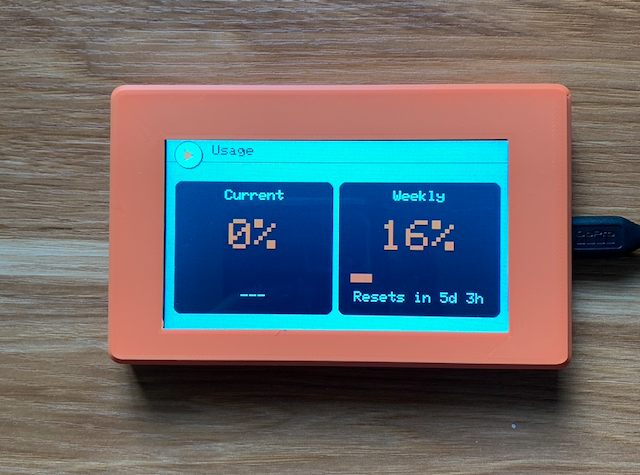
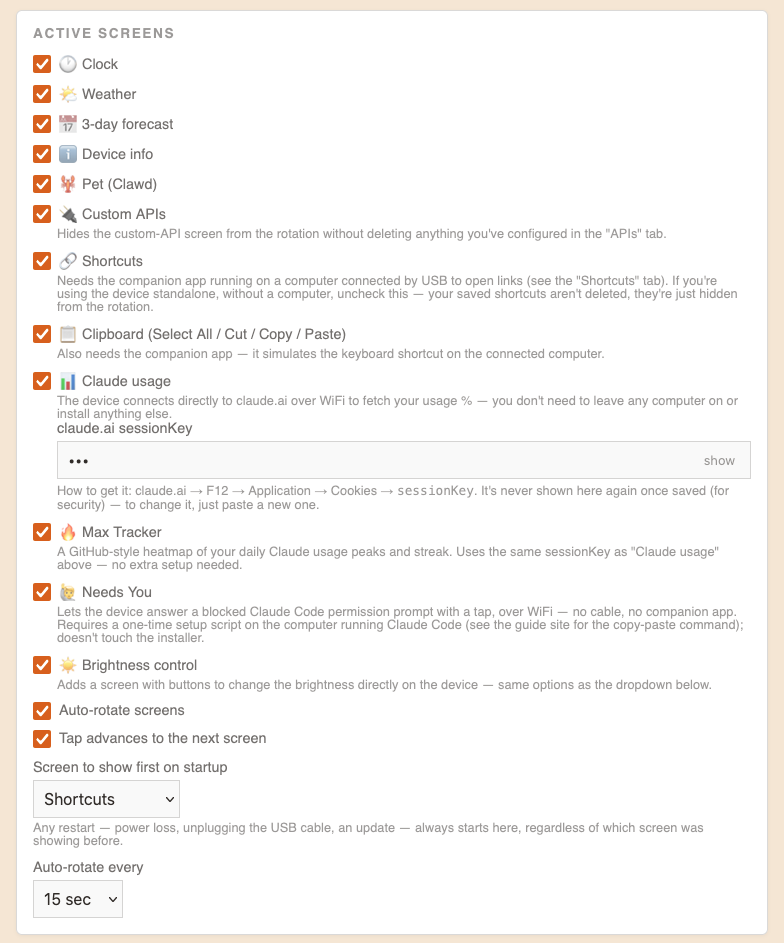
📊 Claude Usage Channels tab
Paste your claude.ai session key once, and the device fetches your usage directly over Wi-Fi — no computer needs to stay on. Shows your current 5-hour window and weekly usage side by side, each with a countdown to when it resets.
📷 Add screenshot
assets/screens/claude-usage.png
📷 Add screenshot
assets/screens/claude-usage.png
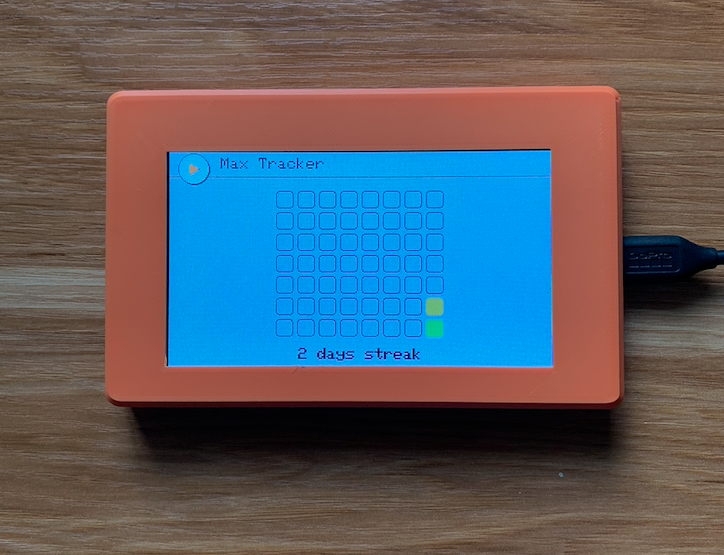
🔥 Max Tracker Channels tab
A GitHub-style heatmap of your daily Claude usage peaks over the last 8 weeks, plus your current streak. Rides the same session key as Claude Usage above — if that's already set up, there's nothing else to configure.
📷 Add screenshot
assets/screens/max-tracker.png
🙋 Needs You Channels tab · Needs companion app once
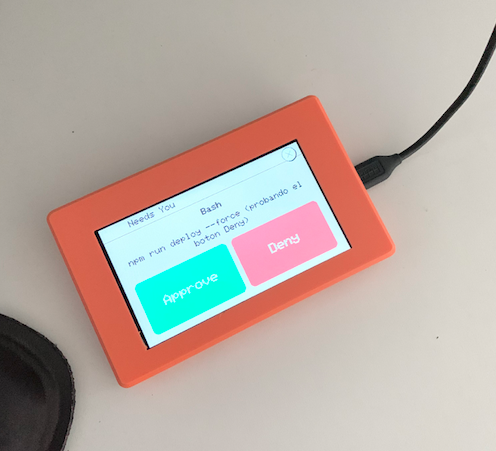
Answer a blocked Claude Code permission prompt with a tap on the device — over Wi-Fi, no USB cable needed at the moment it happens. When a PreToolUse hook fires, the display interrupts whatever screen was showing with the tool name and a short summary, plus a quick brightness flash so it's hard to miss.
Tap Approve or Deny to answer directly. The ✕ in the corner dismisses the popup without deciding — the device goes back to normal, and Claude Code falls back to asking you in the terminal as usual.
Setup is one-time and mostly automatic: if you already have Claude Code configured on the same computer running the companion app (see Shortcuts below), the app registers the hook by itself the first time it opens — no separate script to run. Then just turn on Needs You in the dashboard's Channels tab.
📷 Add screenshot
assets/screens/needs-you.png
☀️ Brightness Channels tab
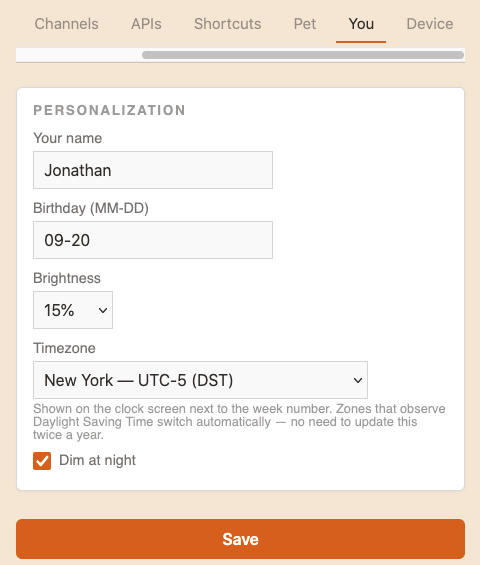
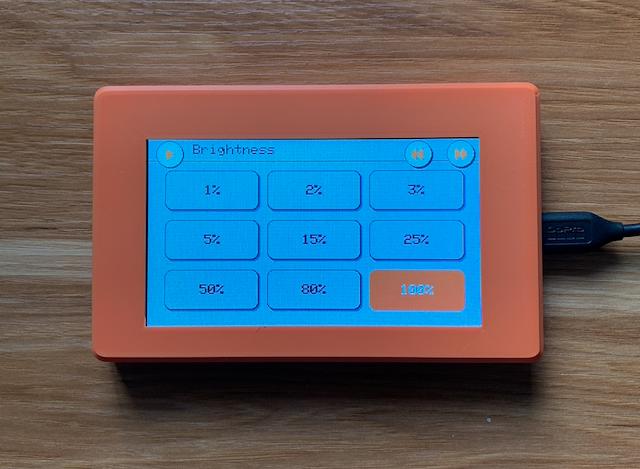
A grid of buttons to change the screen's brightness by tapping the device directly, without opening the dashboard — same options as the brightness dropdown in Device settings.
📷 Add screenshot
assets/screens/brightness.png
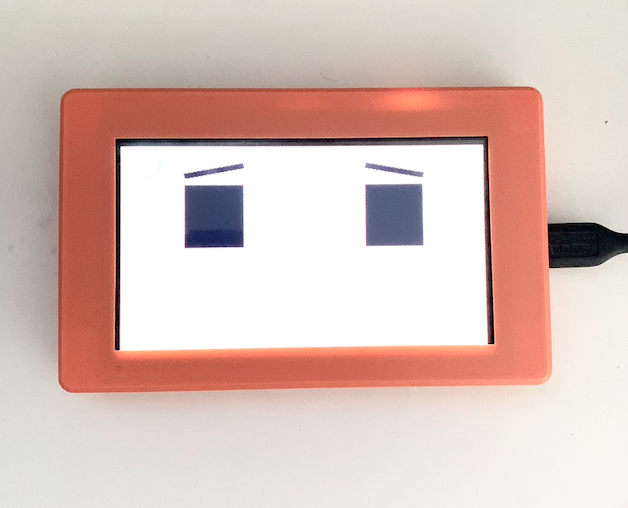
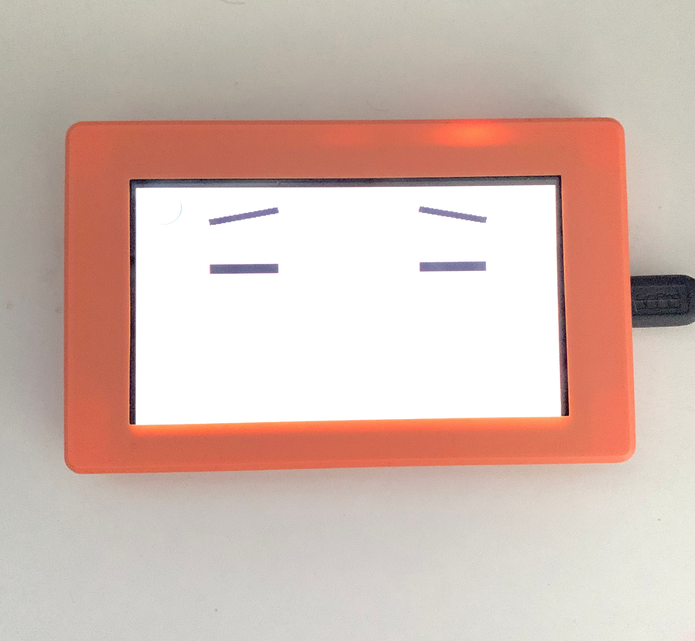
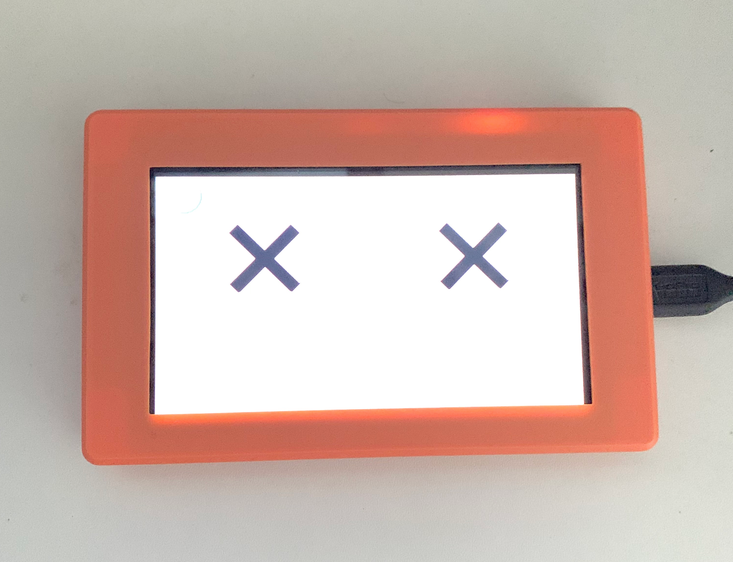
🦞 Pet Channels tab
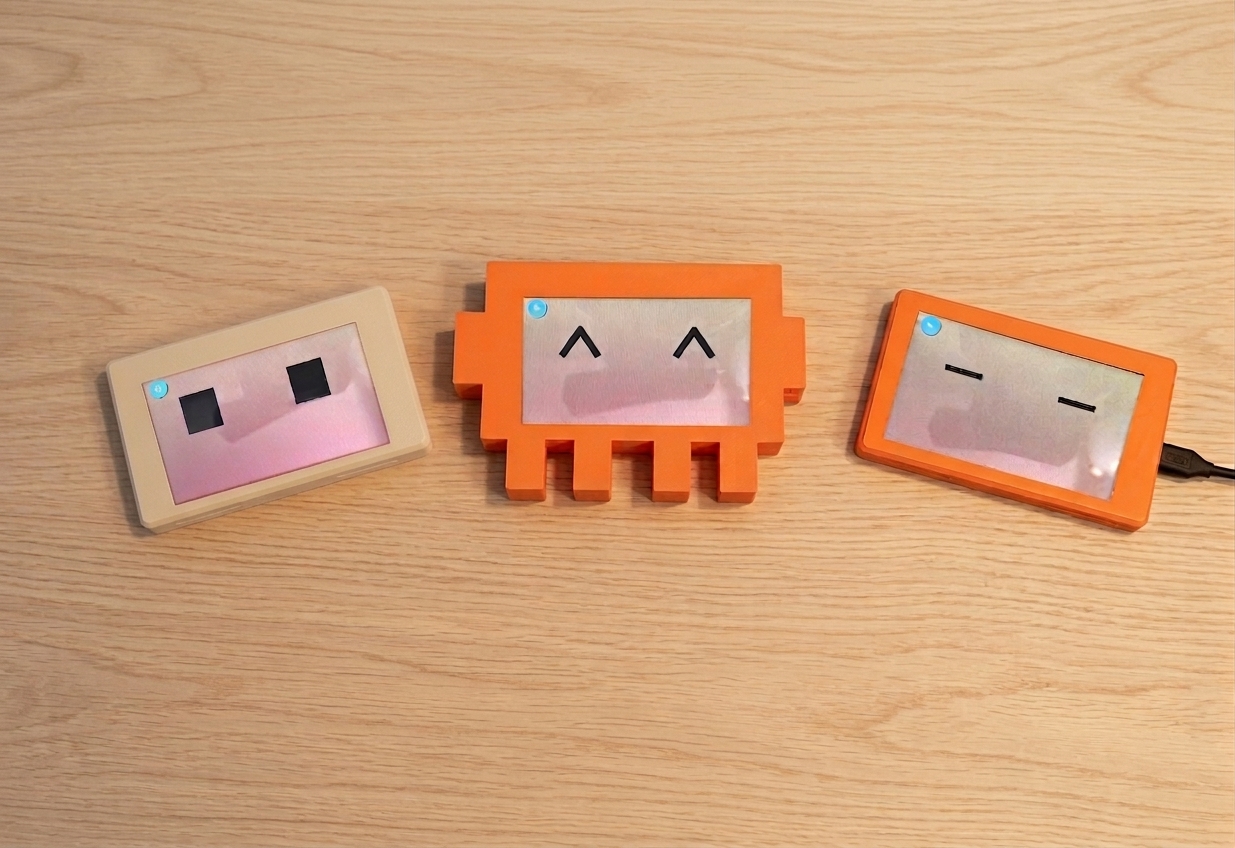
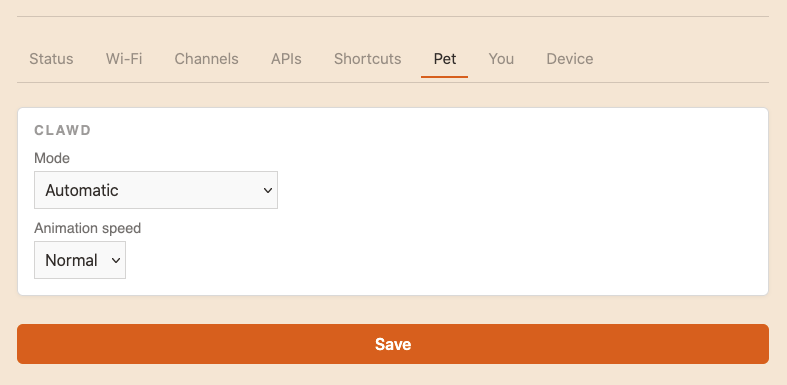
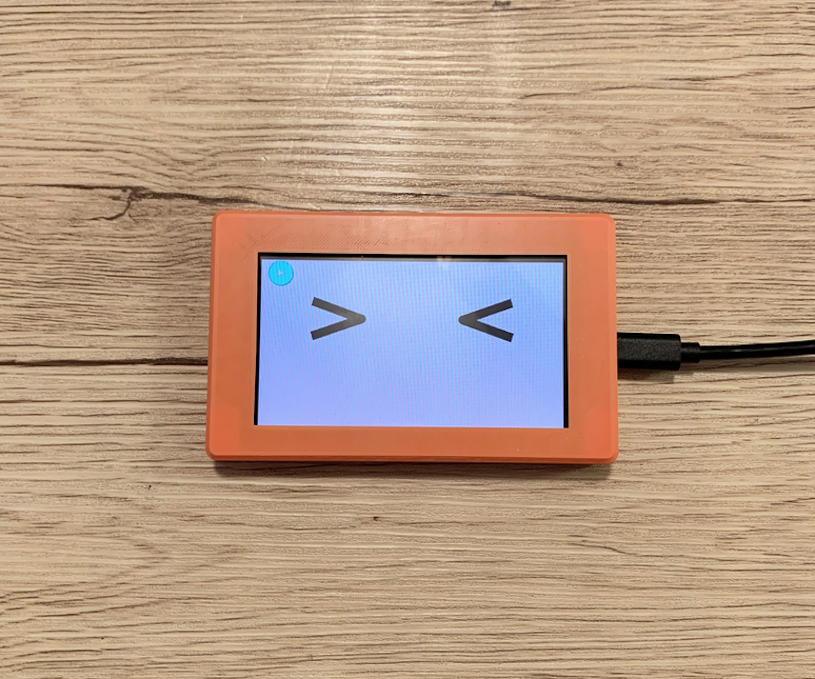
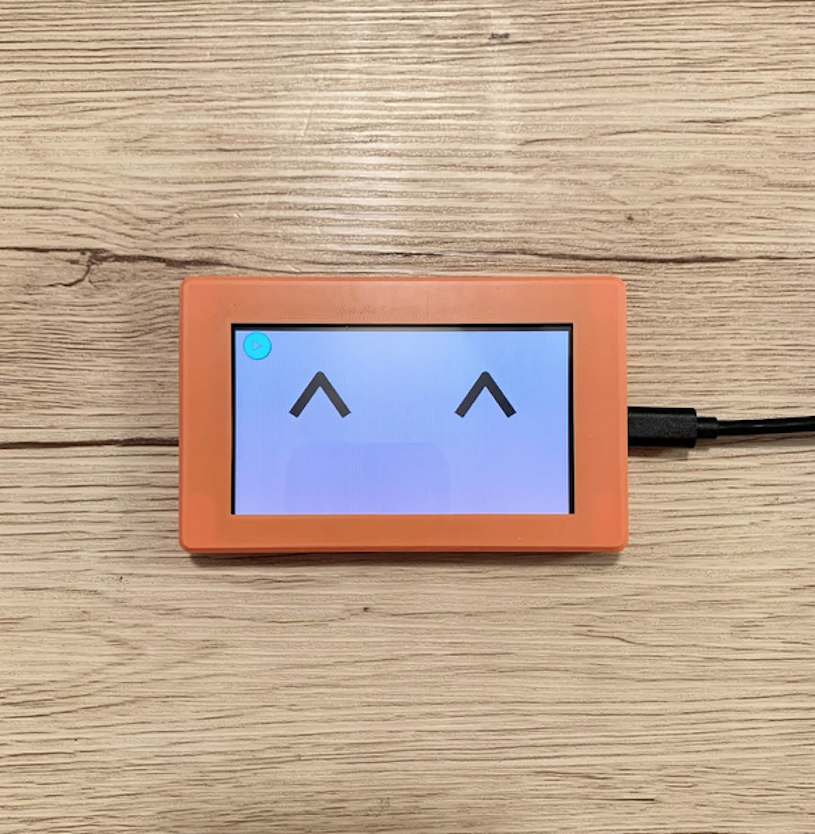
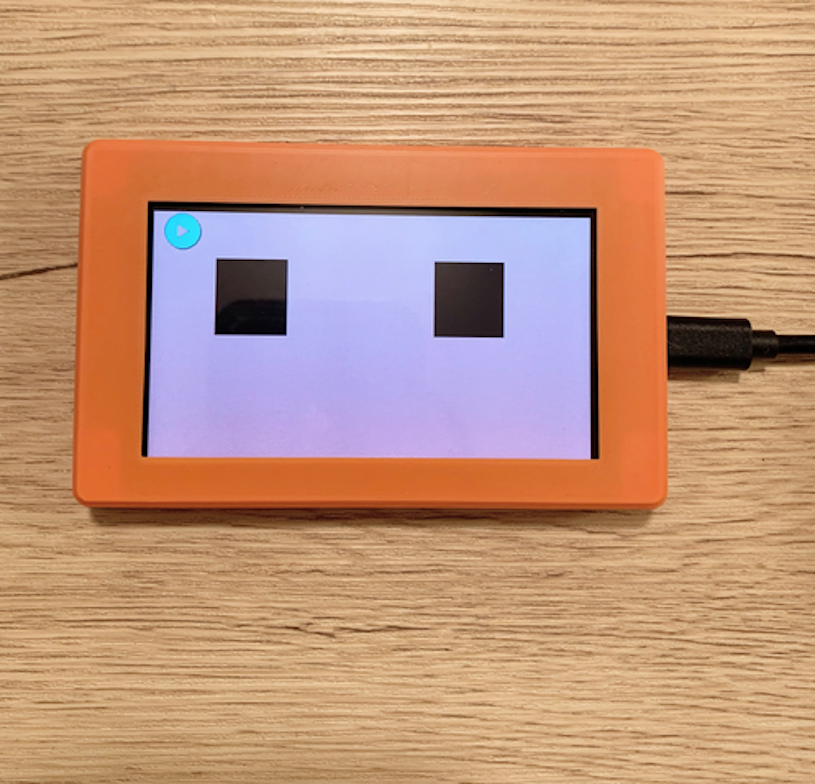
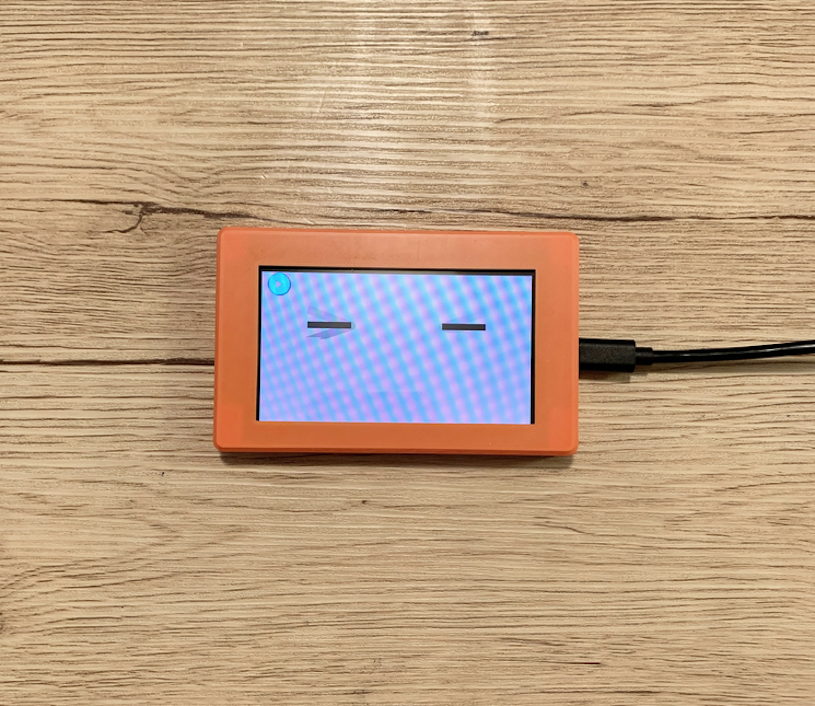
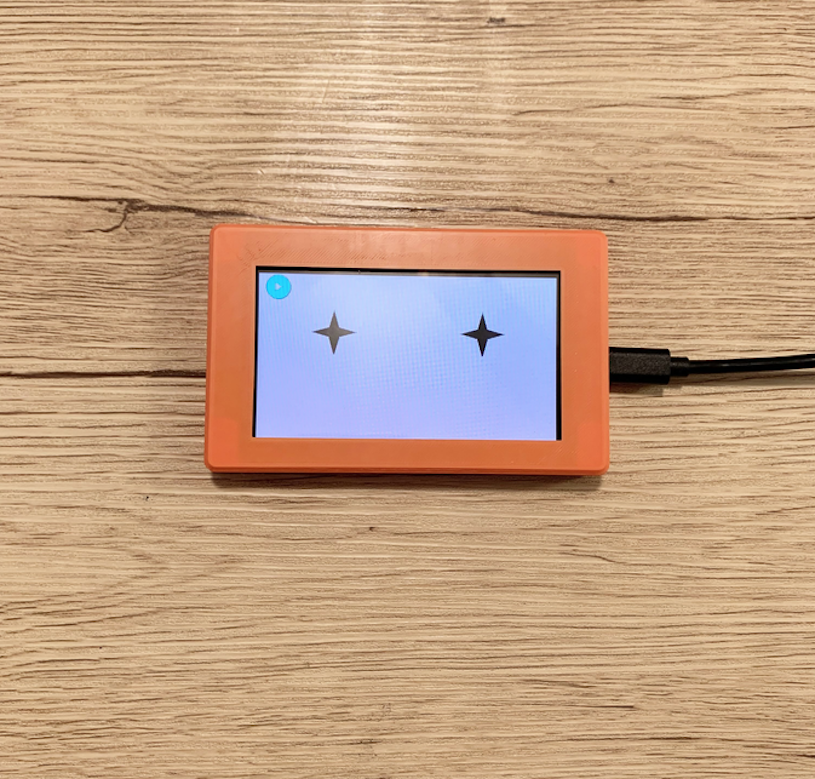
Your device's own mascot. In Automatic mode it reacts to how fast you're using up your Claude quota; in Manual mode you pick a fixed expression yourself.
📷 Add screenshot
assets/screens/pet-manual.png
📷 Add screenshot
assets/screens/pet.png
📷 Add screenshot
assets/screens/pet-automatic.png
📷 Add screenshot
assets/screens/pet-manual.png
📷 Add screenshot
assets/screens/pet-manual.png
📷 Add screenshot
assets/screens/pet-manual.png
📷 Add screenshot
assets/screens/pet-manual.png
📷 Add screenshot
assets/screens/pet-manual.png
📷 Add screenshot
assets/screens/pet-manual.png